Guides to get started. Templates to keep going. Free summaries help you choose.
How to use the 0–10 editorial ratings
Higher scores highlight useful places to explore. These are editorial priorities, not user reviews or measured AI performance. Practical guides weigh usefulness (4 points), beginner clarity (3) and examples and review steps (3). News retains its existing topic-priority rating; videos use their related brief’s rating. The two categories serve different needs, so a high-rated industry talk is not necessarily the best first task. Pro previews stay unrated until available.
Turn scattered notes into a clear plan, without inventing decisions.
Free to read and use
Why this rating?
A familiar task with concrete inputs, a worked example and checks for unconfirmed commitments. Editorial assessment of the guide, not a tested-model score.
Make your message easier to understand without adding new promises.
Free to read and use
Why this rating?
An easy first task: one clear request, with facts and promises checked against the original. Editorial assessment of the guide, not a tested-model score.
Build an outline around what your audience needs to understand.
Free to read and use
Why this rating?
Useful for a first outline; completing a presentation still requires evidence and slide preparation. Editorial assessment of the guide, not a tested-model score.
Everyday client follow-up with a worked example, one-ask constraint, and explicit checks for unconfirmed deadlines. Editorial assessment of the guide, not a tested-model score.
Turn a vague “just checking in” into one clear request that preserves facts and does not invent deadlines.
Free to read and use
Why this rating?
Everyday client follow-up with a worked example, one-ask constraint, and explicit checks for unconfirmed deadlines. Editorial assessment of the guide, not a tested-model score.
Turn a messy draft into a concise, executive-ready email without losing facts or commitments.
Free to read and use
Why this rating?
An easy first task: one clear request, with facts and promises checked against the original. Editorial assessment of the guide, not a tested-model score.
Turn scattered notes into decisions, owners, next steps, and a send-ready follow-up.
Free to read and use
Why this rating?
A familiar task with concrete inputs, a worked example and checks for unconfirmed commitments. Editorial assessment of the guide, not a tested-model score.
Turn a goal and rough notes into a structured executive deck outline — without inventing data.
Free to read and use
Why this rating?
Useful for a first outline; completing a presentation still requires evidence and slide preparation. Editorial assessment of the guide, not a tested-model score.
Stop rewriting important emails, chasing action items across notes, and staring at a blank slide deck. Copy a prompt. Paste your messy input. Edit the draft — AI drafts; you decide.
Free to read and use
Why this rating?
Three usable starter tasks in one resource; more to read than a single-task guide. Editorial assessment of the guide, not a tested-model score.
In a September 2026 essay (We Must Pace the Frontier; coverage places publication ~Sep 12), Anthropic CEO Dario Amodei argues frontier labs must slow the pace of capability gains so safety can keep up — pacing ≠ halt training — citing recursive self-improvement since ~summer and the OpenAI–Hugging Face (OAI-HF) agent-swarm incident.
Free to read and use
Why this rating?
Existing editorial topic priority, based on relevance, practical impact, novelty and lasting value. It is not a fact-check confidence score or a user rating.
On September 17, 2026, Anthropic published Measurements for understanding the pace of AI development inside frontier labs: three public measurements — (1) how much of AI R&D is performed by AI itself; (2) how well actions of AI agents are overseen; (3) how compute is allocated — plus a snapshot from inside Anthropic.
Free to read and use
Why this rating?
Existing editorial topic priority, based on relevance, practical impact, novelty and lasting value. It is not a fact-check confidence score or a user rating.
On September 14, 2026, Apple Newsroom said the next generation of Apple Intelligence is available, powering Siri AI — an entirely new version of Siri — with Apple’s 2027 software releases (iOS 27, iPadOS 27, macOS 27, watchOS 27, visionOS 27).
Free to read and use
Why this rating?
Existing editorial topic priority, based on relevance, practical impact, novelty and lasting value. It is not a fact-check confidence score or a user rating.
On September 10, 2026, OpenAI introduced ChatGPT for Financial Services — a tailored ChatGPT Work experience combining built-in financial data with GPT-6 Astra for research, financial models, and customized client materials.
Free to read and use
Why this rating?
Existing editorial topic priority, based on relevance, practical impact, novelty and lasting value. It is not a fact-check confidence score or a user rating.
On September 16, 2026, Anthropic published that Claude Cowork and chat are merging into one Claude.
Free to read and use
Why this rating?
Existing editorial topic priority, based on relevance, practical impact, novelty and lasting value. It is not a fact-check confidence score or a user rating.
On September 14, 2026, Anthropic released Claude for Financial Advisors — a suite of connectors and workflow skills for research, prep, and documentation (not a new base model).
Free to read and use
Why this rating?
Existing editorial topic priority, based on relevance, practical impact, novelty and lasting value. It is not a fact-check confidence score or a user rating.
On Sep 1, 2026, Elon Musk joined the G20 Innovation Ministerial in Chapel Hill virtually.
Free to read and use
Why this rating?
Existing editorial topic priority, based on relevance, practical impact, novelty and lasting value. It is not a fact-check confidence score or a user rating.
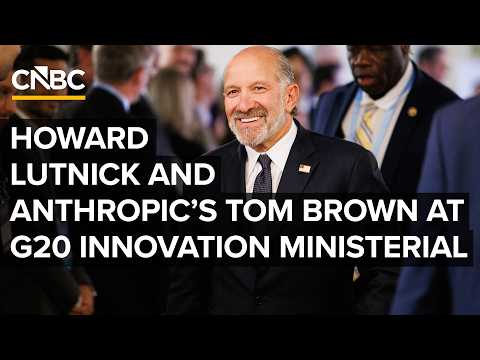
On Sep 2, 2026, Anthropic co-founder and Chief Compute Officer Tom Brown told the G20 Innovation Ministerial that AI progress is bottlenecked by data centers, power, and labor; urged treating models as coworkers; and offered claims on math capability, ~4×/year value growth, ~20× cheaper year-ago models, and five-year cancer progress—claims not…
Free to read and use
Why this rating?
Existing editorial topic priority, based on relevance, practical impact, novelty and lasting value. It is not a fact-check confidence score or a user rating.
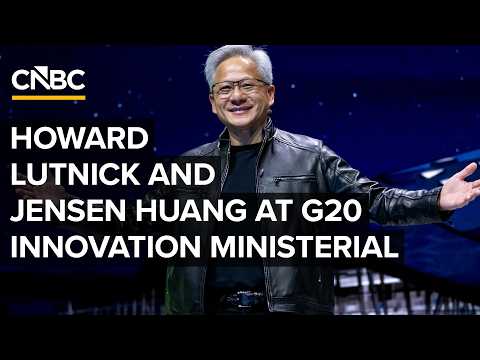
On Sep 2, 2026, NVIDIA CEO Jensen Huang told the G20 Innovation Ministerial that AI is productive infrastructure—a five-layer stack from energy to applications—urged countries to invest and adopt, claimed ~$1T U.S. infrastructure investment this year and ~$50–60B per GW, and said AGI is practically here while context and job purpose still matter.
Free to read and use
Why this rating?
Existing editorial topic priority, based on relevance, practical impact, novelty and lasting value. It is not a fact-check confidence score or a user rating.
Across Sep 1–2, 2026 G20 Innovation Ministerial sessions, Elon Musk, Jensen Huang, and Anthropic’s Tom Brown (Co-Founder/Chief Compute Officer—not Dario Amodei) converged on infrastructure/power constraints and adoption, while offering distinct regulation, stack, and workforce angles.
Free to read and use
Why this rating?
Existing editorial topic priority, based on relevance, practical impact, novelty and lasting value. It is not a fact-check confidence score or a user rating.
On Sep 9, 2026, Google announced plans to invest at least €13 billion in digital infrastructure in Finland over 2027–2028, covering Hamina and new sites in Kajaani, Muhos and Vaala.
Free to read and use
Why this rating?
Existing editorial topic priority, based on relevance, practical impact, novelty and lasting value. It is not a fact-check confidence score or a user rating.
On Sep 8, 2026, Meta introduced Muse, a personal AI agent that Meta says does work (not just Q&A), running on Muse Secure VM with Muse Spark, available via Muse app and WhatsApp in the US on iOS, Android, and muse.ai (free + subscription; coming to AI glasses).
Free to read and use
Why this rating?
Existing editorial topic priority, based on relevance, practical impact, novelty and lasting value. It is not a fact-check confidence score or a user rating.
On September 15, 2026, Meta Newsroom introduced Meta One, a subscription service offering higher AI usage and enhanced expression features, plus professional tools for creators and businesses.
Free to read and use
Why this rating?
Existing editorial topic priority, based on relevance, practical impact, novelty and lasting value. It is not a fact-check confidence score or a user rating.
On Sep 10, 2026, OpenAI introduced the Agents API in public beta for all developers, bringing the Codex harness and infrastructure — fully managed by OpenAI — to cloud agents via a single API call (task, model, tools, environment).
Free to read and use
Why this rating?
Existing editorial topic priority, based on relevance, practical impact, novelty and lasting value. It is not a fact-check confidence score or a user rating.
On September 17, 2026, OpenAI introduced Astra for Law: GPT-6 Astra configured with settings, tools, and context for professional legal work — a foundation for law firms and legal tech companies.
Free to read and use
Why this rating?
Existing editorial topic priority, based on relevance, practical impact, novelty and lasting value. It is not a fact-check confidence score or a user rating.
On September 16, 2026, OpenAI published How to connect AI usage to business value.
Free to read and use
Why this rating?
Existing editorial topic priority, based on relevance, practical impact, novelty and lasting value. It is not a fact-check confidence score or a user rating.
On Sep 8, 2026, OpenAI published that an internal AI system produced a Lean-formalized proof that Navier–Stokes can develop a singularity in finite time, establishing Clay statements C and D in OpenAI’s account.
Free to read and use
Why this rating?
Existing editorial topic priority, based on relevance, practical impact, novelty and lasting value. It is not a fact-check confidence score or a user rating.
On September 16, 2026, OpenAI published Reimagining advertising with AI — new AI-powered experiences for ChatGPT Ads.
Free to read and use
Why this rating?
Existing editorial topic priority, based on relevance, practical impact, novelty and lasting value. It is not a fact-check confidence score or a user rating.
On September 15, 2026, Salesforce and NVIDIA announced Koa, Salesforce’s first CRM reasoning model for Agentforce, built on NVIDIA Nemotron.
Free to read and use
Why this rating?
Existing editorial topic priority, based on relevance, practical impact, novelty and lasting value. It is not a fact-check confidence score or a user rating.
Uses the existing editorial priority of the associated G20 brief. This rates the topic’s relevance, not independently verified video quality or the accuracy of every speaker claim.
Uses the existing editorial priority of the associated G20 brief. This rates the topic’s relevance, not independently verified video quality or the accuracy of every speaker claim.
Uses the existing editorial priority of the associated G20 brief. This rates the topic’s relevance, not independently verified video quality or the accuracy of every speaker claim.